Meet the Devices
A tour of the top 16 modules and instruments in the Sigilgraph Audio Workbench.
The Sigilgraph Audio Workbench is a modular audio environment where sound is routed, sequenced, and modulated on a visual canvas.
Here is a tour of 16 of the 64 devices that form the core of the workbench.
- 1. Matrix Arpeggiator
- 2. Sub-Synth
- 3. VST Host
- 4. Graphic Equalizer
- 5. Drum Machine (Pentarhythym)
- 6. Modal Percussion
- 7. Control Step Sequencer
- 8. Chord Device
- 9. Composite Device
- 10. Finisher (Finish Mastering Limiter)
- 11. Polisher (Spectral Polisher)
- 12. Patina (Patina Saturator)
- 13. Piano Roll
- 14. Sample Track
- 15. Automation Device
- 16. Sampler
1. Matrix Arpeggiator
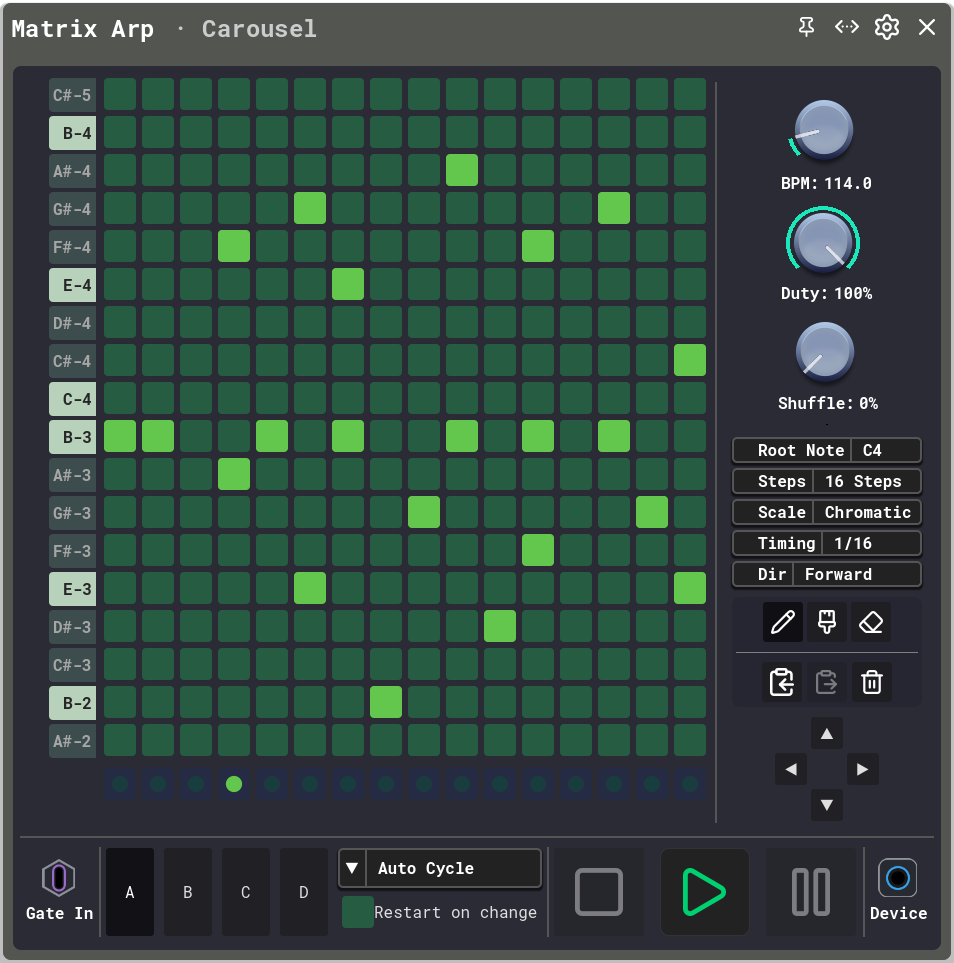
The Matrix Arpeggiator is a polyphonic sequencer and arpeggiator. Unlike standard synthesizers, it does not produce sound itself; instead, it provides a 16x18 grid where you can draw note patterns to trigger other instruments. With pencil, brush, and eraser modes, you can sketch melodic hooks, basslines, or polyrhythmic runs. It supports selectable scales to keep your melodies in key, features four independent pattern banks with auto-cycling, and is driven by external gates or transport clocks.
2. Sub-Synth
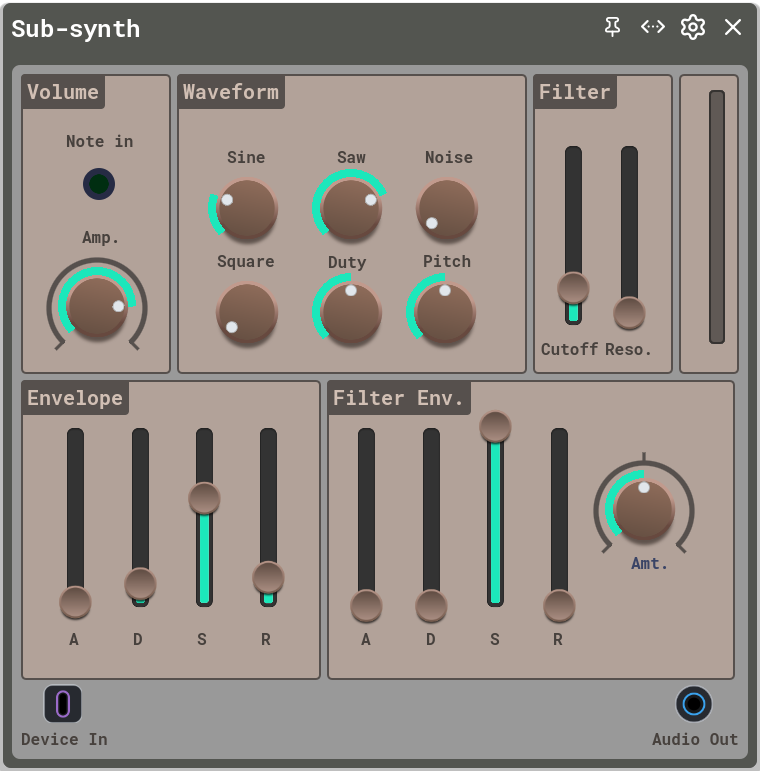
The Sub-Synth (Simple Wave Generator) is a polyphonic subtractive synthesizer for sound generation. It features four band-limited sound sources: Sine, Saw, Square (with adjustable duty cycle), and White Noise, allowing you mix fundamental waveforms and noise. The mixed signal is routed through a resonant low-pass filter and shaped by Attack-Decay-Sustain-Release (ADSR) envelopes for both volume and filter cutoff, creating basses, leads, and synth tones.
3. VST Host
The VST Host is a bridge between Sigilgraph and the wider world of audio plugins. A VST Host that infinitely expands Sigilgraph with the universe of VST3 devices across the wild. It loads any compatible plugin and exposes its internal parameters to the canvas, allowing other Sigilgraph devices to control them through CV, exponentiating the expressive and creative power of the workbench. Chain VST Host devices together to combine effects with instruments, build hybrid processing racks, and weave third-party plugins deeply into your patches.
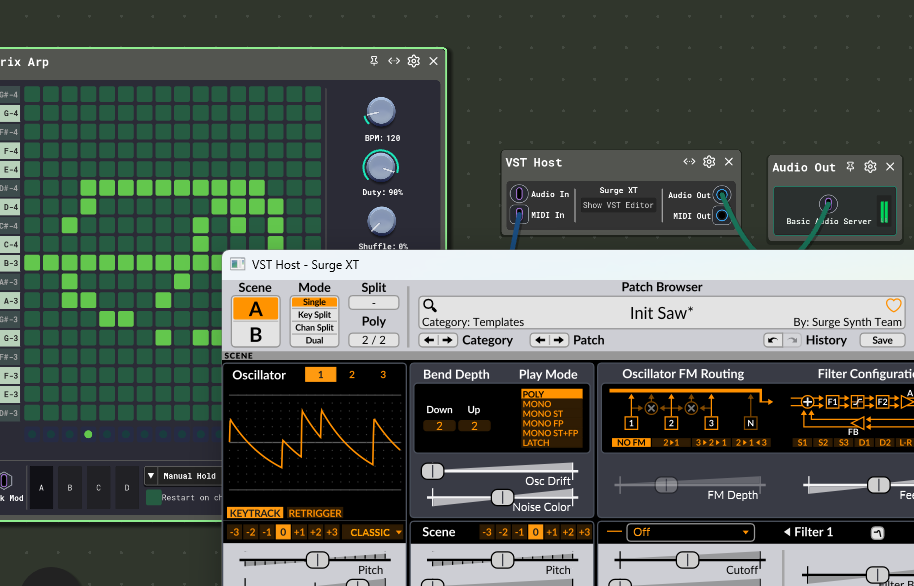
In the screenshot above, Sigilgraph is interacting with the venerable Surge XT, a free, open-source hybrid synthesizer that has become a staple in sound design.
4. Graphic Equalizer
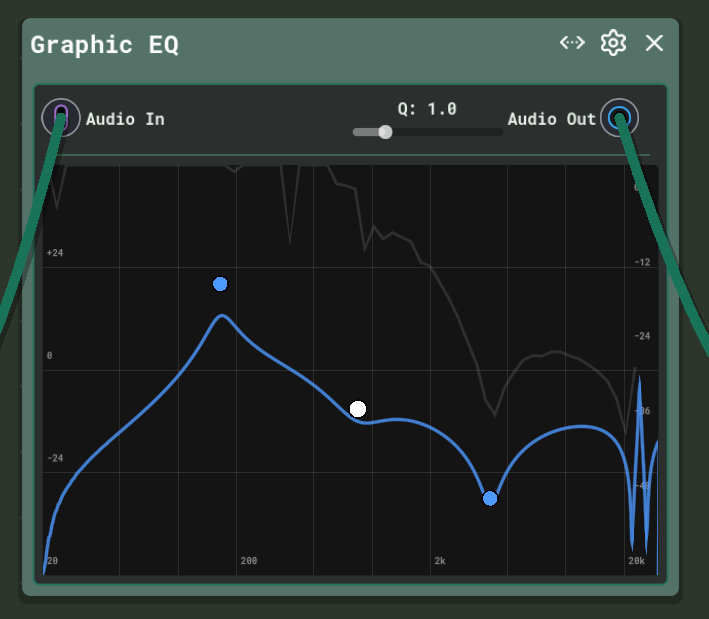
The Graphic Equalizer is a parametric EQ device providing visual control over the frequency spectrum. It allows users to place up to 10 control points on a logarithmic grid to boost or cut specific frequencies with adjustable Q bandwidth factors. An FFT frequency histogram runs in the background, showing the frequency spectrum to help identify problematic frequencies or shape tones.
5. Drum Machine (Pentarhythym)
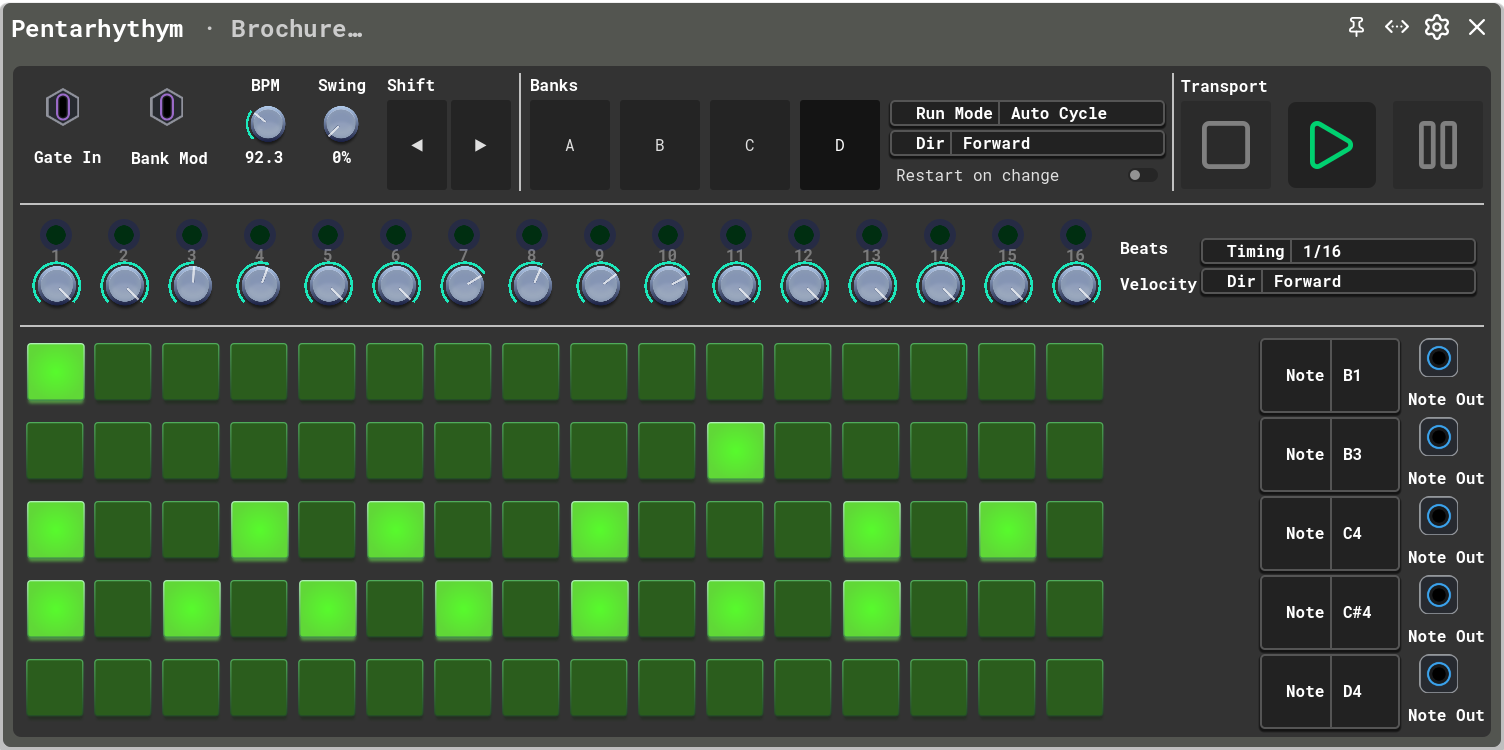
The Pentarhythym Drum Machine is a 16-step rhythmic sequencer and drum machine for sequencing drum patterns. It supports 5 independent tracks, custom pattern banks, and controls like Swing and Step Nudging to add swing and step offsets to your patterns.
6. Modal Percussion
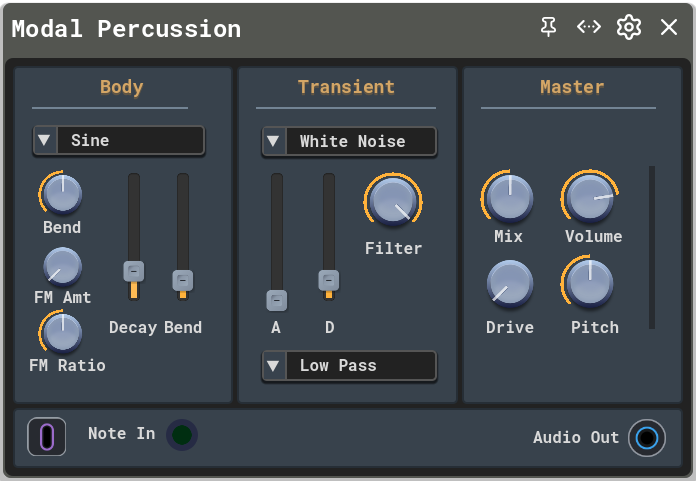
The Modal Percussion synthesizer is a percussion module that blends a tonal “Body” oscillator layer (for pitch and weight) with a filtered “Transient” noise layer (simulating various striker materials like sticks or mallets). It is designed to craft kicks, snares, metallic clangs, and woodblocks as an alternative to FM synthesis.
7. Control Step Sequencer
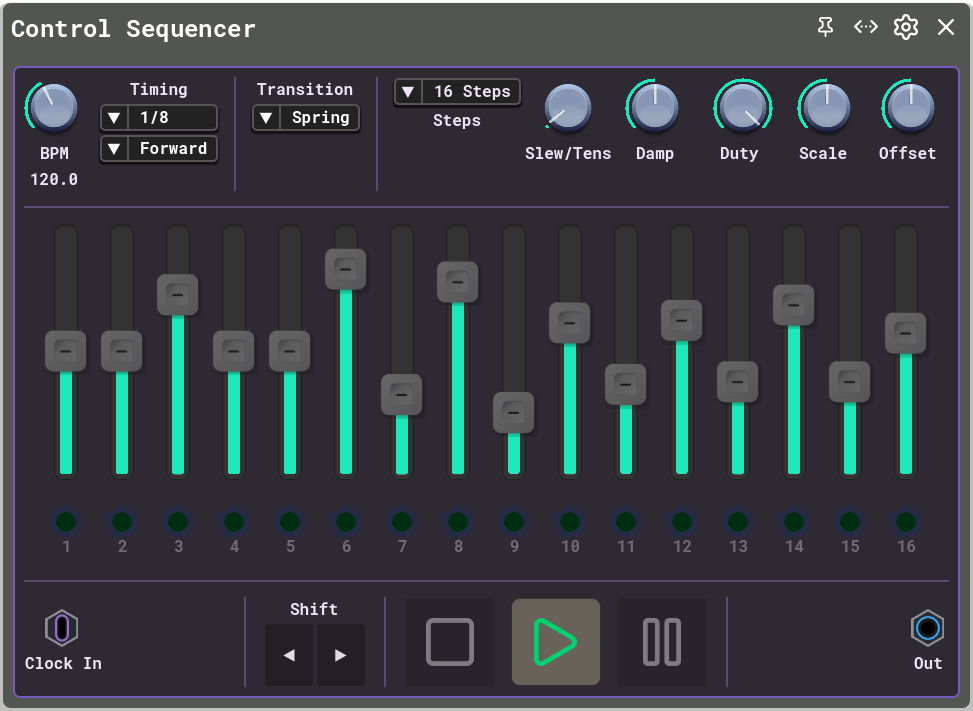
The Control Step Sequencer is a CV (Control Voltage) modulator that generates stepped control signals to animate parameters. Featuring 16 sliders and syncing to the project BPM, it is used to automate filter sweeps, gates, or modulation loops when wired to the parameters of other devices.
8. Chord Device
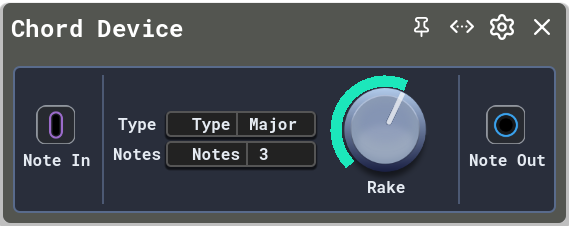
The Chord Device is a MIDI processor that transforms incoming notes into chords. It allows you to build pads and stabs, featuring selectable chord types (Major, Minor, 7ths, Suspended) and a Rake parameter to stagger notes for a strummed effect.
9. Composite Device
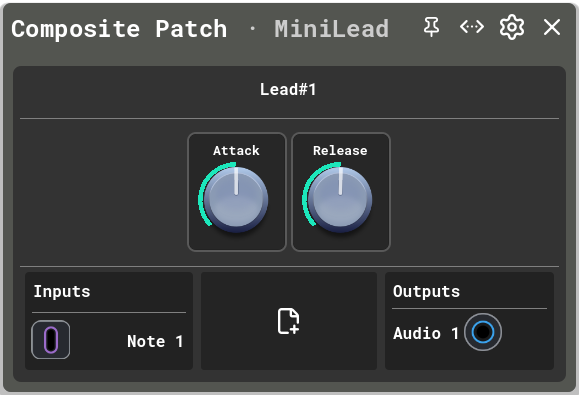
The Composite Device suite is a meta-device system that packages sub-patches into a reusable container. By utilizing input and output boundary blocks, you can build effect chains and macro controls once, and then deploy them as single devices on the canvas.
10. Finisher (Finish Mastering Limiter)
The Finisher is a brickwall limiter and soft clipper for the final stage of the signal chain. It features lookahead, true-peak detection, and auto-release controls to control peak levels and prevent digital clipping.

11. Polisher (Spectral Polisher)
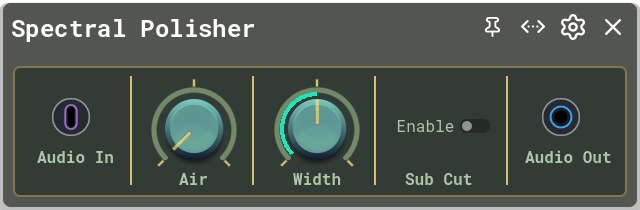
The Polisher is a stereo processor operating in the frequency domain. Leveraging FFT analysis, it applies enhancements such as an air shelf filter for high frequencies, stereo widening above 1kHz, and a high-pass sub cut below 20Hz.
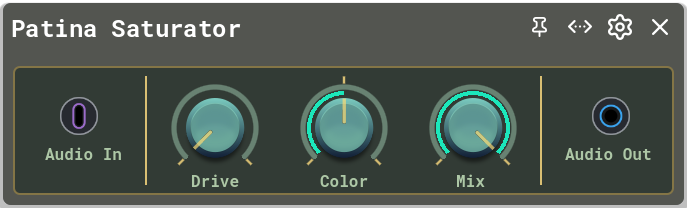
12. Patina (Patina Saturator)
The Patina saturator is a tape and tube saturation emulator that adds harmonic content to the signal. It models analog saturation behavior, introducing harmonics and transient rounding to shape tracks or a full mix.
13. Piano Roll
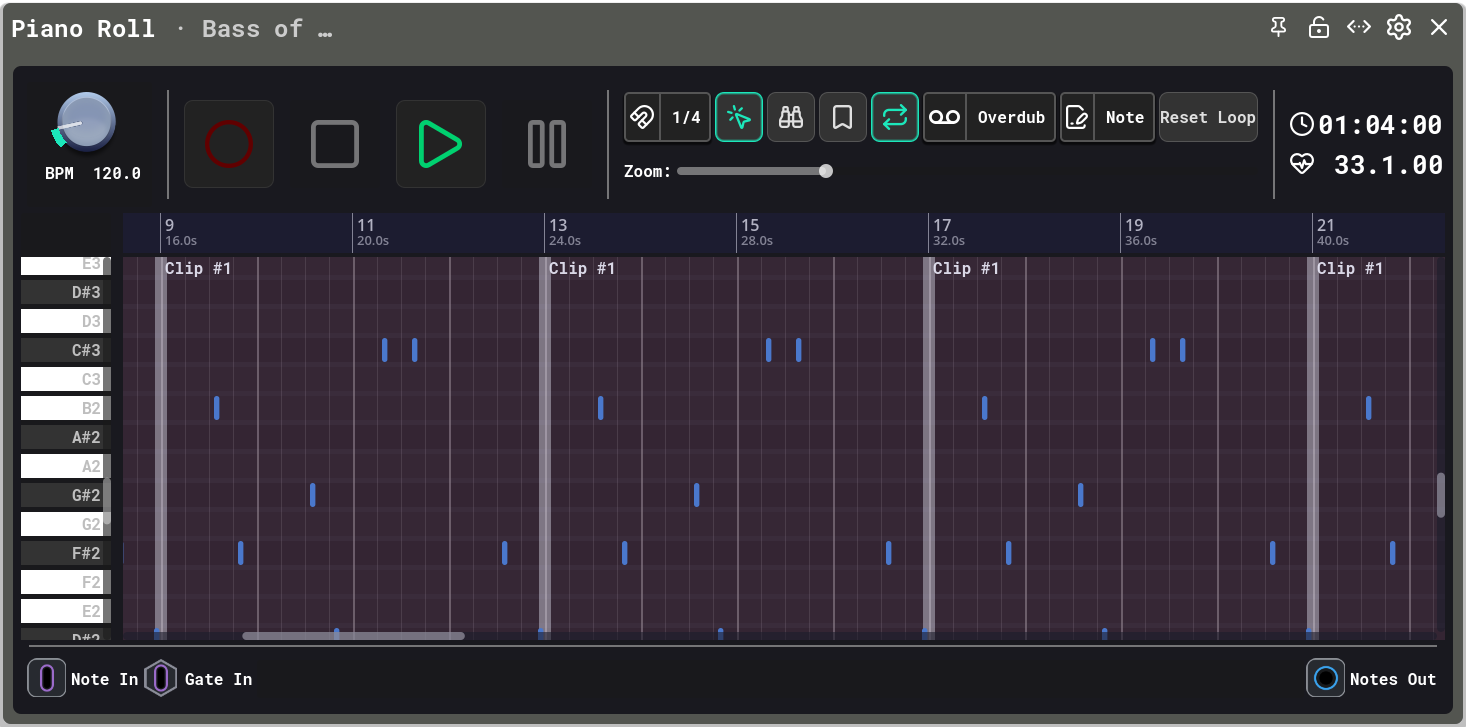
The Piano Roll is the environment for recording and editing MIDI note data on a timeline. It supports clips, polyphonic overdub/replace recording, grid snap, and velocity editing.
14. Sample Track
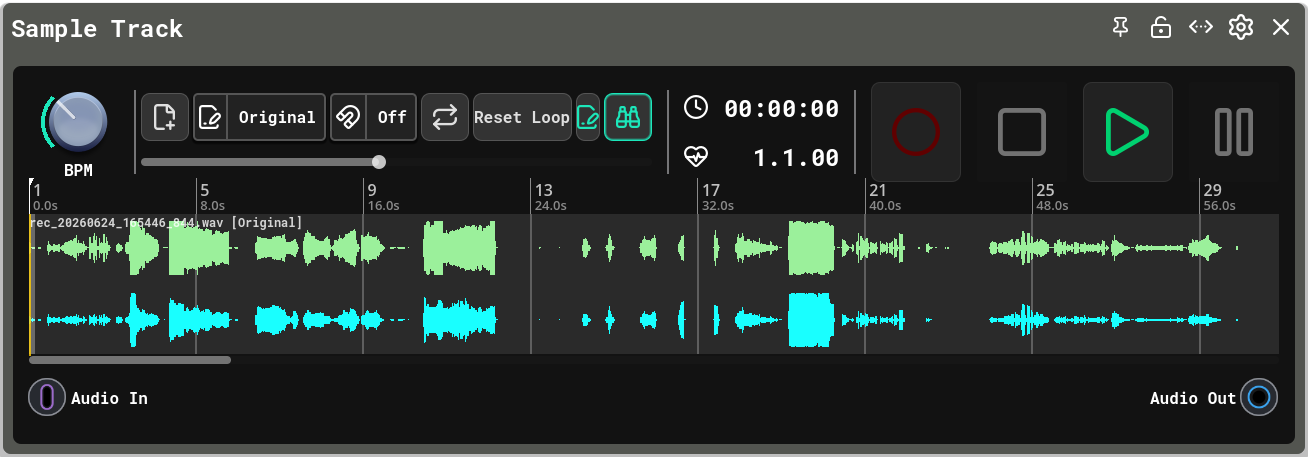
The Sample Track provides a timeline to sequence audio clips. It supports stereo and mono waveform views and tempo-stretching to sync loops to the project BPM.
15. Automation Device
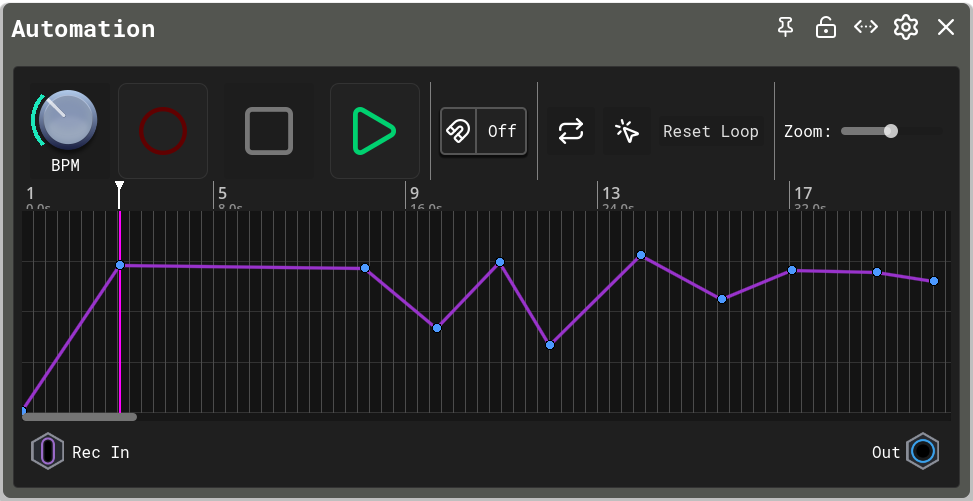
The Automation Device records and generates control signal curves (CV) to modulate parameters. It supports grid snapping, looping, and point editing for filter sweeps, panning, and modulation.
16. Sampler
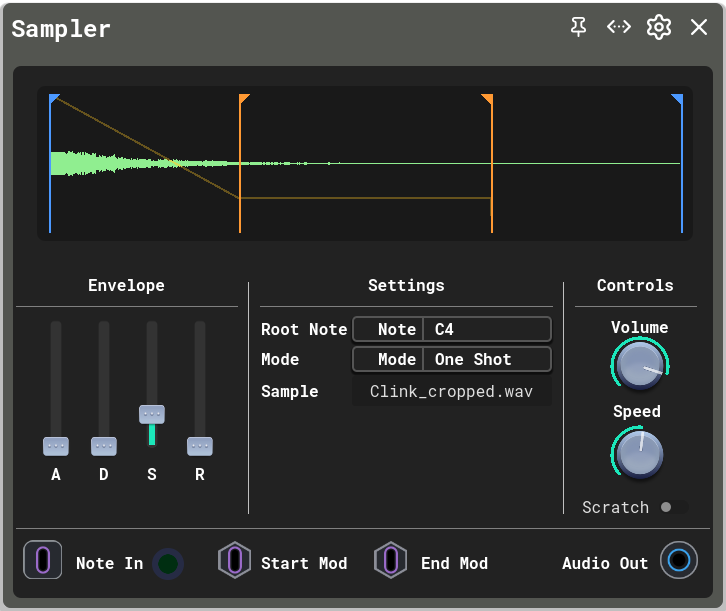
The Sampler is a polyphonic instrument that plays samples triggered by MIDI notes. It features waveform start/end adjustments, ADSR envelopes, CV modulation of loop boundaries, and a mouse-based scratch mode.